
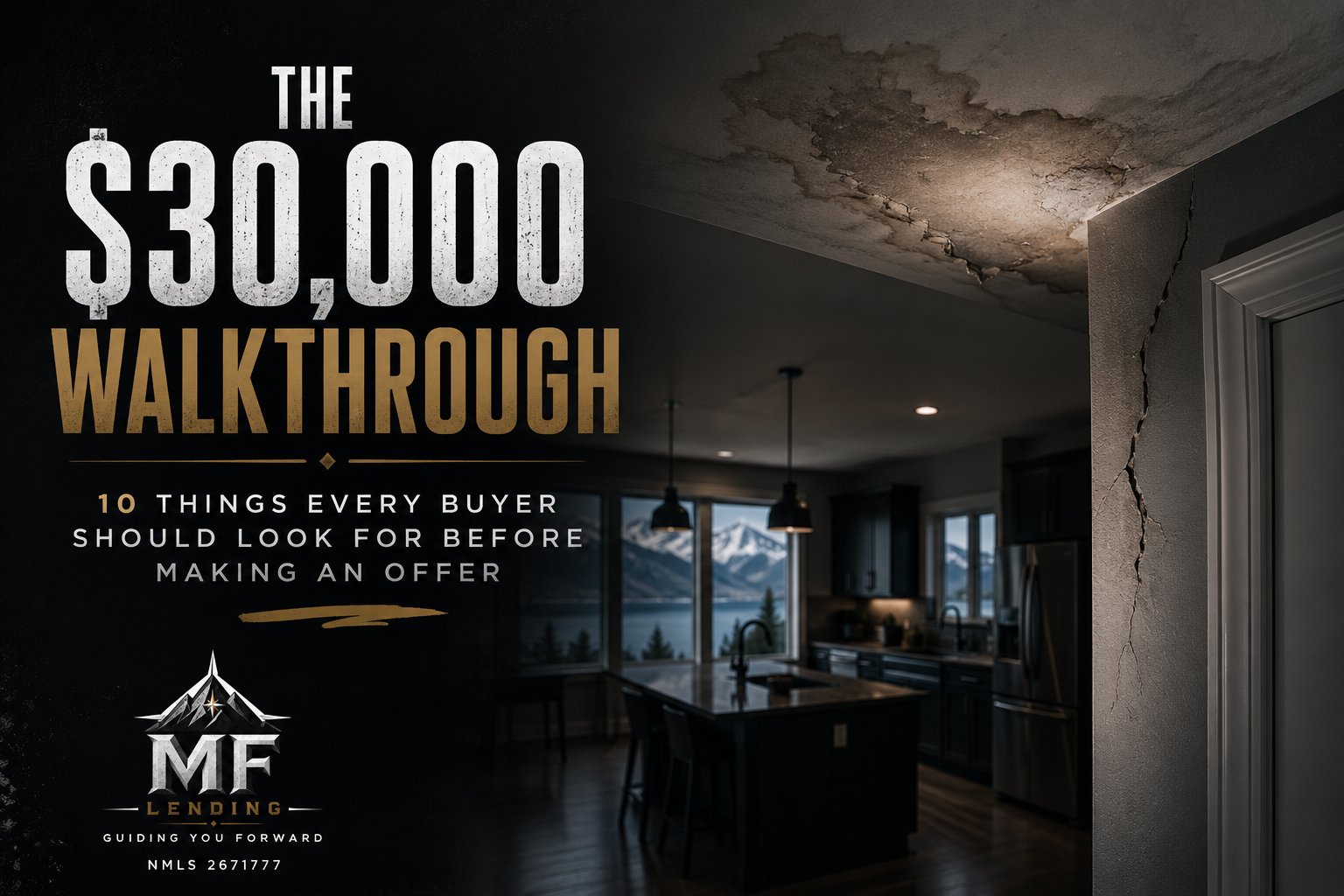
The $30,000 Walkthrough
10 Things to Look for When Touring a House in Alaska
Michael Foster
6/30/20261 min read
You've been there before. The listing photos looked incredible, the kitchen belongs on HGTV, the house smells like vanilla and cinnamon, and somebody either baked cookies or wants you to think they baked cookies. Within five minutes you've mentally moved in, your spouse is already talking about paint colors, the kids have claimed bedrooms, and you've somehow convinced yourself that this is the one. That's completely normal because buying a home is emotional. It should be. You're choosing the place where birthdays, holidays, backyard barbecues, and late-night conversations are going to happen. The problem is that emotion has a funny way of making us stare at quartz countertops while completely ignoring the twenty-five-year-old roof sitting directly above our heads.
The truth is that houses are phenomenal salespeople. Fresh paint hides old problems, carefully placed furniture covers questionable flooring, area rugs magically appear over damaged hardwood, and that faint musty smell somehow disappears because every candle in the lower forty-eight is currently burning on the kitchen island. None of that necessarily means anyone is trying to deceive you. It simply means houses are really good at putting their best foot forward, just like people do during a first date.
That's exactly why every buyer should learn to look beyond the cosmetics before falling in love with a property. A beautiful kitchen is wonderful, but it won't make replacing a roof any cheaper. Granite countertops won't stop a leaking foundation, and trendy light fixtures won't pay for a failed furnace in the middle of an Alaska winter. Before you start measuring walls for your television or deciding where the Christmas tree will go, there are a handful of things worth paying attention to that could save you thousands of dollars after closing.